


Views: 0 Author: Site Editor Publish Time: 2025-09-08 Origin: Site


Choosing the right Cookie Maker Machine is crucial for factory success. It impacts production efficiency, product variety, and overall profitability. In this post, you'll learn how to assess production needs, explore machine types, consider key features, plan costs, ensure proper integration, and prioritize training and support.
When choosing the best cookie maker machine for your factory, start by assessing your production needs carefully. Two main factors play a crucial role here: the volume of cookies you plan to produce and the variety of cookie types you want to offer.
Think about how many cookies your factory needs to make daily or hourly. If you aim to produce thousands of cookies per hour, you'll require a high-capacity machine designed for large-scale production. On the other hand, if your output is smaller or more specialized, a machine with moderate capacity might suffice.
Next, consider the variety of cookies you want to bake. Do you plan to focus on one or two standard cookie shapes, or do you want to offer a diverse range of shapes and fillings? Machines vary in their ability to handle different cookie designs. For example, some machines excel at producing simple drop cookies quickly, while others specialize in intricate shapes or filled cookies. Knowing your variety needs helps narrow down the machine types that fit your factory.
Automation level is another key factor. Fully automated machines can handle dough mixing, shaping, baking, and packaging with minimal human intervention. This boosts efficiency and consistency but often comes with higher upfront costs. Semi-automated or manual machines may require more labor but offer flexibility and lower initial investment.
Consider your budget, labor availability, and production goals. If your factory aims to scale quickly and reduce labor costs, investing in higher automation makes sense. However, if you have skilled bakers who prefer hands-on control or a limited budget, a less automated machine might be better.
How many cookies do you need to produce per hour or day?
What types and shapes of cookies do you want to offer?
How much automation fits your budget and workforce?
Do you expect your production needs to grow soon?
Answering these questions gives you a clear picture of your production needs. It helps you choose a cookie maker machine that matches your volume, variety, and automation preferences, setting your factory up for success.
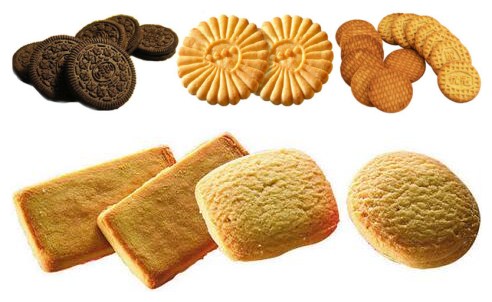
When it comes to choosing the best cookie maker machine for your factory, understanding the different types available is essential. Each machine type offers unique benefits and suits different production needs. Let's explore the most common types:
Drop cookie machines are the classic choice for producing large batches of uniform cookies quickly. They work by dropping measured portions of dough directly onto baking trays. These machines are straightforward to operate and maintain, making them ideal for factories focused on high-volume production of simple cookie shapes like chocolate chip or sugar cookies.
Key Benefits:
Fast production speeds
Easy size and shape adjustments by changing nozzles
Low maintenance requirements
However, drop cookie machines are less suited for intricate cookie designs or filled cookies.
Wire-cut machines slice dough into various shapes using adjustable wires. This method offers more flexibility than drop machines, allowing for diverse cookie shapes such as rectangles, hearts, or custom designs. Wire-cut machines are excellent for factories wanting to offer a wider variety of cookie styles without sacrificing uniformity.
Key Benefits:
Ability to create multiple shapes and sizes
Precise cutting for consistent shapes
Suitable for medium-volume production
These machines, however, typically operate at slower speeds than drop cookie machines, which may limit output in very high-volume settings.
Rotary moulder machines specialize in producing cookies with detailed patterns and embossed designs. They use rotating molds to shape dough into decorative cookies, such as biscuits with floral or lace patterns. This type is perfect for bakeries focusing on premium or specialty cookie products.
Key Benefits:
High-quality, visually appealing cookies
Variety of interchangeable molds for different designs
Ideal for specialty and decorative cookies
Rotary moulders require skilled operators and usually involve higher investment and maintenance costs.
Encrusting machines enable the production of filled cookies by wrapping dough around flavorful fillings like jam, cream, or nuts. These machines are essential for factories aiming to produce filled or sandwich cookies that surprise customers with a burst of flavor inside.
Key Benefits:
Consistent filling distribution
Suitable for various filling types
Adds product variety and premium appeal
Due to their complex design, encrusting machines need more frequent cleaning and maintenance.
Combination machines merge features from multiple cookie machine types, allowing a factory to produce different cookie styles using one piece of equipment. For example, a combination machine may switch between drop cookie and wire-cut modes, offering great flexibility.
Key Benefits:
Multi-functional production capabilities
Cost-effective for diverse product lines
Programmable controls for easy switching between modes
Combination machines are ideal for factories that need to adapt quickly to changing market demands without purchasing multiple machines.
Choosing the right cookie maker machine means focusing on key features that ensure your factory meets production demands efficiently and consistently. Let’s break down the essential features to look for:
Your machine must handle the volume your factory requires. High-capacity machines produce thousands of cookies per hour, ideal for large-scale operations. Speed matters too. Faster machines increase output but may require more maintenance. Balance capacity and speed based on your daily production goals.
Invest in machines made from durable, food-grade materials like stainless steel. These resist corrosion and withstand heavy use. Quality construction means fewer breakdowns and consistent cookie shapes and sizes. Durable machines save money over time by reducing repair costs and downtime.
A cookie maker machine should be easy to clean to maintain hygiene and comply with food safety standards. Machines with modular parts and smooth surfaces reduce cleaning time. Also, consider how simple it is to perform routine maintenance. Machines designed for easy access to components help keep production running smoothly.
Automation reduces labor costs and improves consistency. Look for features such as automatic dough feeding, shaping, and cutting. Programmable controls allow quick adjustments for different cookie types. Efficient machines minimize waste by precise portioning and reduce human error.
When choosing the best cookie maker machine for your factory, understanding the cost factors involved is vital. The initial purchase price is just one part of the equation. To make a wise investment, you need to carefully plan your budget, evaluate the potential return on investment (ROI), and consider ongoing expenses like spare parts and maintenance.
Start by defining a clear budget range. Cookie maker machines vary widely in price depending on their type, capacity, and automation level. High-capacity and fully automated machines tend to have higher upfront costs but often bring greater efficiency and production speed. On the other hand, simpler or semi-automated machines usually cost less but might require more manual labor and time.
When setting your budget, consider your factory’s financial capacity and production goals. Avoid underestimating costs, as a low initial price may mean sacrificing durability or features that save money later.
ROI is a critical factor when investing in industrial equipment. A cookie maker machine that costs more upfront can still be a smart choice if it increases output, reduces labor costs, and improves product consistency. Calculate how much additional revenue or savings the machine can generate over its lifespan.
Consider factors such as:
Increased production volume and speed
Reduced labor and operational costs
Lower waste and improved product quality
Energy efficiency and utility savings
A machine that pays for itself through these benefits offers a strong ROI. Be realistic in your estimates and include timeframes to see when the investment will become profitable.
Maintenance is an ongoing expense often overlooked during purchase decisions. Machines require regular servicing to keep running smoothly. Spare parts, such as belts, cutters, or sensors, may need replacement over time. Some specialized cookie maker machines have parts that are costly or hard to source.
Check the availability and cost of spare parts before buying. Also, inquire about the manufacturer’s maintenance services and support plans. A reliable service network can minimize downtime and repair costs.
Routine maintenance includes cleaning, lubrication, and inspection. Machines designed for easy maintenance reduce labor time and prevent unexpected breakdowns, saving money in the long run.
Selecting a cookie maker machine that fits your factory’s space and production line is just as important as choosing the right type and features. Proper sizing and seamless integration ensure your operations run smoothly without costly disruptions.
First, measure the available floor space in your factory. Factor in room for operators to move comfortably and space for maintenance tasks. Oversized machines can cause cramped work areas, slowing down production and risking safety. Undersized machines might limit your output and growth potential.
Match the machine size to your production volume. High-capacity machines tend to be larger and heavier, requiring sturdy floors and sometimes special foundations. Smaller machines suit limited space but may not meet high-volume demands. Consider future expansion plans too—choosing a slightly larger machine now can save costly upgrades later.
Your cookie maker machine must work well with other equipment like mixers, ovens, and packaging units. Check compatibility for dough feeding, conveyor speeds, and control systems. Machines that can synchronize with your current production line reduce bottlenecks and downtime.
Look for machines with flexible connectivity options, such as programmable logic controllers (PLCs) or standard communication protocols. This flexibility allows easier integration and future upgrades. Also, assess the installation process. Machines designed for straightforward setup minimize production interruptions.
Create a detailed factory layout including all equipment and workflow paths.
Consult with equipment suppliers about your existing line and space constraints.
Consider modular or scalable machines that can adapt as your needs evolve.
Plan for utility connections like power, water, and compressed air near the machine location.
Include space for spare parts storage and operator training areas.
Choosing the best cookie maker machine for your factory involves assessing production needs, including volume, variety, automation, cost, and integration. Consider different machine types, such as drop cookie, wire-cut, rotary moulder, encrusting, and combination machines. Evaluate key features like capacity, quality, and maintenance. Proper training and support are crucial for maximizing productivity. Skywin Foodstuff Machinery Co., Ltd. offers advanced machines with unique benefits, ensuring efficient and reliable production to enhance your factory's success.
A: A Cookie Maker Machine is a device designed to automate the production of cookies, handling tasks like shaping, baking, and sometimes packaging.
A: Assess your production needs, including cookie volume, variety, and desired automation level, to select a machine that aligns with your goals.
A: Automation reduces labor costs, increases efficiency, and ensures consistent product quality in cookie production.
A: Factors include machine type, capacity, automation level, and additional costs like maintenance and spare parts.


