


Views: 0 Author: Site Editor Publish Time: 2025-09-26 Origin: Site


Salty Pretzel Production Line Ever wonder how your favorite salty pretzels are made? The process is more intricate than you might think. Efficient salty pretzel production lines are essential for high-quality snacks. In this post, you'll learn about key components and automation benefits in pretzel manufacturing. Discover how streamlining processes can boost production efficiency and product quality.
A salty pretzel production line consists of several essential components designed to work together seamlessly. Each plays a unique role in crafting the perfect pretzel, from dough preparation to packaging. The main components include:
Extruder: This machine shapes the dough into various pretzel forms, such as sticks, braids, or traditional twists. The extruder uses low pressure to form consistent shapes quickly.
Guillotine Cutter: It slices pretzels to the desired length, offering flexibility in product size. This cutter can operate continuously for high-speed production or cycle mode for precision.
Topping Dispensers: These apply toppings like salt, seeds, or spices evenly across the pretzels. Different dispenser types handle various topping textures and sizes.
Hot Cooker: This step uses a caustic bath or waterfall system to cook pretzels before baking. It controls texture and color by evenly applying the solution.
Oven: The baking oven solidifies the pretzel’s shape and texture. Modern ovens offer multiple heating methods—radiation, convection, conduction—for precise control.
Additional Systems: Dryers, coolers, and packaging equipment complete the line, ensuring product quality and shelf life.
Each component is designed to integrate smoothly, minimizing downtime and maximizing output.
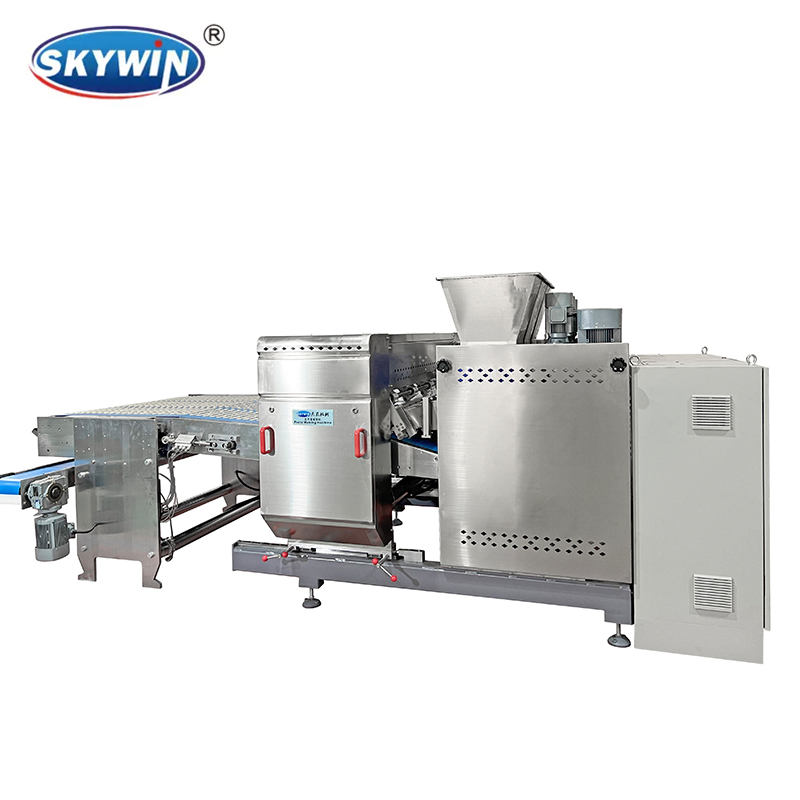
Automation is vital for efficiency in pretzel manufacturing. It reduces manual labor, improves consistency, and increases throughput. Key benefits include:
Speed: Automated lines can produce thousands of pounds of pretzels per hour, far surpassing manual methods.
Consistency: Machines maintain uniform shapes, sizes, and topping distribution, enhancing product quality.
Flexibility: Automated systems can switch between product types quickly, accommodating market trends or customer requests.
Reduced Waste: Precise cutting and topping reduce material loss.
Data Integration: Modern lines often include sensors and software for monitoring production metrics, enabling quick adjustments.
Automation also supports scalability, allowing manufacturers to expand capacity without major overhauls. Whether running fully automatic or semi-automatic lines, automation ensures smooth, reliable operations.
The extrusion process plays a vital role in shaping pretzels efficiently. Low pressure extruders are commonly used in pretzel production lines due to their flexibility and gentle handling of dough. Unlike high-pressure extruders, low pressure models push dough through dies slowly, preserving its texture and structure. This results in consistent, high-quality pretzel shapes that meet customer expectations.
Low pressure extruders can easily switch between different dies and compression heads. This ability allows manufacturers to produce a variety of pretzel shapes, such as sticks, braids, and traditional twists, without extensive downtime. The extrusion process is also more energy-efficient and reduces wear on equipment, which lowers maintenance costs.
Using extruders in pretzel production offers several benefits that enhance the manufacturing process:
Shape Consistency: The extruder forms dough uniformly, ensuring each pretzel has the same size and shape. This consistency improves product quality and consumer satisfaction.
Product Variety: Changing dies quickly allows for easy production of multiple pretzel varieties on the same line, helping manufacturers respond to market trends or customer preferences.
Increased Speed: The extrusion process is faster than manual shaping, allowing production lines to reach higher output rates without sacrificing quality.
Dough Handling: Low pressure extruders handle dough gently, preventing damage that can affect the final product’s texture.
Reduced Waste: Precise extrusion minimizes dough waste by forming exact shapes, leading to cost savings.
Integration: Extruders fit seamlessly into automated production lines, working well with cutters, topping dispensers, and baking ovens.
By incorporating low pressure extruders, pretzel manufacturers can streamline operations, improve product consistency, and expand their product offerings efficiently.
The guillotine cutter plays a crucial role in pretzel production. It slices pretzel dough or baked pretzels into precise lengths quickly and efficiently. This cutter uses a single sharp blade that moves down vertically, ensuring clean, accurate cuts without deforming the product. It can operate in two modes:
Continuous Mode: The blade cuts repeatedly at high speed, ideal for mass production. It can reach up to 175 cuts per minute, maximizing throughput.
Cycle Mode: The blade cuts at a slower pace, up to 50 cuts per minute, allowing for more control when producing specialty or smaller batches.
This versatility makes the guillotine cutter suitable for a wide range of pretzel sizes and shapes. It can cut pretzels as short as one inch (25 mm) with the press of a button, giving manufacturers precise control over product dimensions.
One key advantage of the guillotine cutter is its adjustability. Manufacturers can easily change cutting lengths to meet different product specifications or customer demands. This flexibility supports product variety without requiring extensive downtime or equipment changes.
Adjustments can be made quickly, allowing the same production line to create:
Traditional pretzel twists in various lengths
Pretzel sticks or rods of different sizes
Mini pretzels or bite-sized snacks
This adaptability helps manufacturers respond to market trends or seasonal demands efficiently. It also reduces waste by cutting dough or baked pretzels exactly to the desired size, minimizing offcuts.
The guillotine cutter integrates seamlessly with upstream and downstream equipment, such as extruders and topping dispensers. This integration ensures smooth workflow and consistent product quality throughout the line.
In salty pretzel production, applying toppings evenly is crucial for taste and appearance. Omega dispensers deliver a reliable solution. They use rotating rolls to spread toppings like pretzel salt, poppy seeds, and sesame seeds uniformly over the pretzel surface. This method ensures every pretzel has consistent coverage, enhancing visual appeal and flavor balance.
For finer toppings, such as cinnamon or ground spices, dispensing screens control the distribution. These screens allow precise amounts of powder to fall on pretzels, avoiding clumps or uneven patches. Vibrating trays handle larger or irregular toppings, like caraway seeds, nut pieces, or seed/spice mixes. The vibration keeps toppings moving, preventing clogging and ensuring smooth application.
This variety in dispenser types offers flexibility to manufacturers. They can easily switch toppings or combine several on the same production line without major adjustments. This adaptability supports product innovation and meets different market demands.
Toppings do more than add flavor; they influence texture and consumer appeal. Common toppings include:
Pretzel Salt: Large crystals add crunch and classic salty taste.
Seeds: Poppy, sesame, and caraway seeds provide nutty flavors and visual contrast.
Spices: Cinnamon, garlic powder, or paprika introduce unique flavor profiles.
Nut Pieces: Chopped nuts add crunch and richness.
Seed/Spice Mixes: Custom blends create signature tastes.
Manufacturers can layer toppings or create specialty products by combining different dispensers. For example, a pretzel stick might get a base layer of salt from rotating rolls, followed by a sprinkle of garlic powder from dispensing screens.
The topping application step integrates smoothly after cutting and shaping. It prepares pretzels for the next stage—cooking and baking—without slowing production. Automated topping dispensers maintain speed and consistency, essential for high-volume lines.
Pretzel production lines vary in capacity to meet different business needs. Standard high-volume lines can produce between 400 to 1000 kilograms (approximately 880 to 2200 pounds) of pretzels per hour. These lines suit manufacturers aiming for large-scale output, such as commercial bakeries or snack producers supplying supermarkets.
For smaller operations or specialty producers, lower volume lines exist. These systems focus on flexibility and ease of use over maximum throughput. For example, the Vector Pretzel Pine line offers a compact, lower capacity option. It supports artisanal or niche markets where product variety and quality matter more than sheer volume.
Choosing the right production volume depends on factors like:
Market demand and growth projections
Available factory space
Budget for equipment and operation
Desired product range and complexity
Understanding these factors helps manufacturers select a line that balances efficiency and cost-effectiveness.
Pretzel production lines come in automatic, semi-automatic, or manual configurations to suit different operational preferences and budgets.
Automatic SystemsFully automated lines handle most steps—from dough shaping through baking and packaging—with minimal human intervention. They offer:
High throughput and consistent quality
Reduced labor costs and human error
Real-time monitoring and data collection for process optimization
Quick changeovers between product types using modular components
These systems fit well in large-scale operations aiming for maximum efficiency and scalability.
Manual and Semi-Automatic SystemsManual or semi-automatic lines require more operator involvement. They offer:
Lower upfront costs and simpler maintenance
Greater control over individual production steps
Flexibility for small batches or specialty items
Manufacturers can combine manual stations with automated equipment, creating hybrid lines tailored to specific needs.
Many modern systems are modular, allowing upgrades from manual to automated stages as business grows. This modularity helps reduce initial investment risk while enabling future expansion.
Streamlining the pretzel production process involves key components like extruders, guillotine cutters, and automated systems that enhance efficiency and consistency. Future trends in snack manufacturing focus on modular equipment, enhanced automation, and data integration to meet diverse market demands. Skywin Foodstuff Machinery Co., Ltd. offers innovative solutions to optimize production lines, ensuring high-quality pretzels and operational excellence. Their advanced technology provides manufacturers with the flexibility to adapt to changing trends, delivering value through efficient and scalable snack production systems.
A: A Salty Pretzel Production Line is a system of machines that work together to efficiently produce pretzels, from dough preparation to packaging, ensuring high-quality and consistent products.
A: Automation enhances a Salty Pretzel Production Line by increasing speed, consistency, and flexibility, reducing waste, and integrating data for improved production metrics.
A: Low pressure extruders in a Salty Pretzel Production Line ensure gentle dough handling, consistent shapes, and energy efficiency, reducing equipment wear and maintenance costs.
A: Guillotine cutters slice pretzel dough accurately in a Salty Pretzel Production Line, offering flexible cutting modes for high-speed or precise production.
A: Costs vary based on line capacity, automation level, and customization needs, balancing efficiency with budget considerations for optimal investment.


