


Views: 0 Author: Site Editor Publish Time: 2026-06-29 Origin: Site


Transitioning to or scaling commercial pretzel manufacturing requires significant capital expenditure. Strategic facility planning plays a critical role in your overall success. Choosing the wrong machinery can quickly derail operational goals. Misaligning equipment specifications causes major production issues. It leads to high scrap rates, inconsistent browning, and costly unplanned downtime. You need a reliable, data-driven approach to select the right systems.
This article provides an evidence-based framework for evaluating and implementing industrial machinery. We will help you navigate complex technical requirements without relying on supplier marketing fluff. You will learn how to assess core architectural modules and evaluate vendors properly. We also cover how to prepare your physical factory space for heavy installation. By the end, you will understand exactly what it takes to launch a successful, high-yield operation.
System Modularity: A standard production line requires seamless integration between mixing, forming, caustic treatment, baking, and cooling modules.
Crucial Bottlenecks: The caustic bath (lye application) and baking zones dictate product consistency, safety compliance, and overall line speed.
Supplier Diligence: Evaluating a snack production line supplier requires looking past upfront costs to assess FAT/SAT protocols, spare part availability, and post-installation support.
Every standard pretzel biscuit production line requires modular yet seamless integration. We must define the standard equipment modules first. This establishes a clear baseline for your vendor evaluation. Industrial lines move product through several distinct phases. Each phase relies heavily on the success of the previous one.
Dough Handling & Mixing
Pretzel dough presents unique handling challenges. It typically features a low hydration level, often between 35% and 40%. This stiff consistency places immense torque on mixing equipment. Manufacturers often use robust Z-blade mixers to handle the strain. You must choose between continuous and batch mixing systems. Continuous mixers offer a steady feed rate for high-capacity lines. Batch mixers provide more flexibility for frequent recipe changeovers. In both cases, temperature control remains paramount. Warm dough ferments too quickly, ruining the final texture. Jacket-cooled mixer bowls help maintain an optimal dough temperature.
Extrusion & Forming
Once mixed, the dough moves to the forming section. Precision die-cutting and extrusion mechanisms shape the product. You need to evaluate the machine's flexibility. Can it easily switch between traditional knots, straight sticks, and bite-sized rings? Quick-change dies reduce downtime during product changeovers. Roller speeds must synchronize perfectly to prevent dough tearing.
The Caustic Bath / Cooker
This module serves as the critical differentiator for pretzels. A traditional cracker line does not use a caustic bath. The dough passes through a precise alkaline solution, usually sodium hydroxide (lye). You must handle this solution safely. Operations utilize either a waterfall curtain or a submerged dip bath. Enclosed stainless steel hoods prevent dangerous splashing. Operators need strict control over temperature (typically 80°C to 90°C) and concentration. This specific chemical interaction triggers the signature Maillard reaction during baking. It creates the iconic dark brown crust and unique flavor.
Salting & Seeding
After the caustic bath, the wet dough travels under a salting unit. To ensure uniform topping adherence, you might integrate a dedicated salted pretzel making machine module. Precision is key here. Granular salt bounces easily off fast-moving belts. Focus on equipment featuring recovery systems. These systems catch excess salt and recirculate it. This minimizes waste and ensures uniform application across every batch.
Baking & Drying
Finally, the product enters multi-zone tunnel ovens. Manufacturers typically choose between cyclotherm, direct gas-fired (DGF), or convection designs. Cyclotherm ovens offer gentle, indirect heat, preventing sudden blistering. DGF ovens provide rapid heat transfer for high-speed lines. After baking, a dedicated drying phase is crucial. Pretzels must reach a specific internal moisture level, usually around 2% to 4%. Proper drying prevents mold growth and extends shelf life significantly.
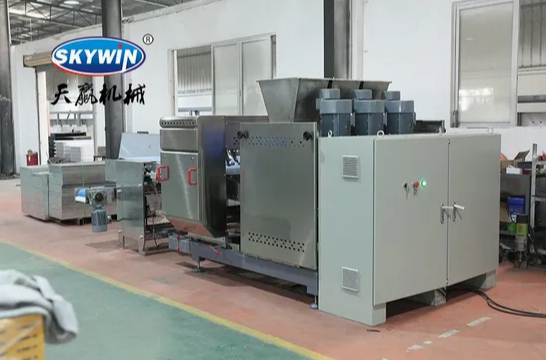
You need a reliable decision-stage framework when comparing specific machinery models. Equipment selection involves much more than matching budget numbers. We must evaluate technical specifications against physical constraints.
Buyers often focus solely on the maximum output capacity. You must calculate viable output (kg/hr) against your available factory floor space. A high-capacity oven means nothing if it does not fit your building. Carefully measure your layout before requesting proposals. Evaluate your cooling solutions strategically. Traditional horizontal cooling conveyors consume massive amounts of floor space. Vertical spiral coolers offer a much better footprint yield. They utilize vertical air space, leaving more room for packaging automation.
Food safety standards grow stricter every year. You must assess all food-contact surfaces thoroughly. Look for continuous TIG welding rather than bolted joints, which trap bacteria. Check the washdown ratings on electrical cabinets and motors. IP65 or higher ensures they withstand low-pressure water jets during cleaning. Adherence to FDA, CE, and EHEDG design guidelines proves the manufacturer prioritizes sanitation. Features like clean-in-place (CIP) systems for the caustic bath save hours of manual labor.
Modern manufacturing relies heavily on data. Evaluate the PLC and HMI controls provided alongside the machinery. Operators need intuitive touchscreens to monitor oven temperatures and belt speeds. Ask vendors if their PLCs use open architectures. Can the line integrate seamlessly into your existing ERP or SCADA systems? Real-time yield tracking helps managers identify bottlenecks instantly. Predictive maintenance sensors monitor motor vibrations. They alert technicians before a catastrophic failure occurs, saving thousands in lost production.
Evaluation Category | Standard Specification | Advanced Specification (High Yield) |
|---|---|---|
Cooling Layout | Horizontal multi-tier conveyors | Vertical spiral cooling towers |
Sanitary Rating | IP54 (Dust and splash resistant) | IP65+ (Full washdown capable) |
Control Systems | Standalone local PLC controls | SCADA/ERP integrated diagnostics |
Heating Zones | Single or dual zone control | Multi-zone modular heat profiling |
Installing heavy baking machinery presents real-world operational challenges. Facility readiness often dictates the success of a new project. You must prepare your physical infrastructure long before the crates arrive.
Tunnel ovens and heavy extruders pull massive amounts of energy. Sizing your utilities correctly prevents delayed installations.
Gas Supply: High-draw tunnel ovens require dedicated, high-pressure gas lines to maintain consistent combustion.
Electrical Loads: Heavy-duty mixers and PLCs need stable, three-phase power drops spaced correctly along the line length.
Compressed Air: Pneumatic cutting tools and sorting gates require clean, dry compressed air to function accurately.
Water and Drainage: Caustic waste management demands specialized chemical-resistant drainage systems.
Industrial baking generates extreme ambient heat. You must manage this heat to protect your workforce. Tunnel ovens need heavy-duty exhaust flues extending through your facility roof. Proper make-up air units keep the factory from becoming negatively pressurized. The caustic bath demands even stricter safety measures. Heating sodium hydroxide releases irritating vapor. You must install proper exhaust systems directly over the lye application zone. Failure to ventilate caustic vapor violates occupational safety regulations and endangers operators.
Many buyers underestimate the learning curve associated with new equipment. Acknowledge your operators will need time to adjust. A brand-new oven requires careful profiling to establish the perfect bake curve. Plan for initial scrap and yield loss during the first few weeks of the commissioning phase. We recommend assigning your best technicians to shadow the installation crew. Hands-on learning during assembly pays massive dividends once full production begins.
A successful project shifts focus from the machine itself to the vendor behind it. Partnering with a reliable snack production line supplier mitigates long-term operational risk. You are buying a relationship, not just metal components.
Never accept shipment without proof of performance. Demand rigorous Factory Acceptance Testing (FAT) at the vendor's facility. You should supply your specific dough formulation for this test. Generic dough will not reveal how the extruder handles your unique recipe. Document every discrepancy during the FAT. Once the equipment arrives, conduct a Site Acceptance Testing (SAT) protocol post-installation. Final payment should hinge on successful SAT completion.
Machine downtime burns through profits rapidly. Evaluate the vendor's guaranteed response times for technical support. Do they offer 24/7 remote diagnostic support? Ask about their policies for technician dispatch. A supplier utilizing regional service hubs can send help much faster than one relying entirely on overseas technicians. Clear SLAs establish accountability from day one.
Proprietary components create dangerous vendor lock-in. If a custom motor burns out, you might wait weeks for a replacement. Insist on standardization across the entire line. Ensure major components are globally sourced. Motors from SEW, PLCs from Siemens, and pneumatics from Festo offer tremendous peace of mind. Your local maintenance team can source these parts independently. This prevents extended downtime and keeps your supply chain highly resilient.
Finalizing the purchase of commercial equipment requires a balanced approach. You must weigh immediate output needs against long-term reliability and supplier accountability. An effective evaluation looks beyond shiny stainless steel. It digs deep into sanitary design, facility constraints, and safety protocols. Securing the right machinery sets the foundation for decades of profitability.
As a next step, compile precise data before initiating Requests for Proposals (RFPs). Document your required throughput in kilograms per hour. Detail your exact product dimensions, shape variations, and bake times. Map out your factory floor constraints and existing utility capacities. Having this data ready forces vendors to provide realistic, tailored solutions.
Do not let guesswork dictate your next major capital investment. Take action today by scheduling a comprehensive facility layout consultation. You can also request a custom equipment specification sheet to align your goals with proven mechanical solutions.
A: Standard lead times typically range from 4 to 8 months. This window accounts for custom engineering, manufacturing, and comprehensive Factory Acceptance Testing (FAT). Shipping logistics add several weeks. Finally, on-site installation and commissioning usually require an additional 2 to 4 weeks depending on line complexity.
A: It is possible, but it requires highly modular equipment. Soft pretzels need higher dough hydration, shorter bake times, and no extended drying phase. Hard pretzel biscuits require stiffer dough, precise extrusion, and a dedicated drying module to reduce internal moisture below 4%. You must plan for flexible oven zones.
A: Direct Gas Fired (DGF) and Cyclotherm ovens are the most popular choices. DGF ovens provide rapid, intense heat transfer, making them excellent for high-speed production. Cyclotherm ovens use radiant heat tubes, offering incredibly precise heat profiling. Many modern lines use a hybrid approach to maximize browning control.
A: Modern lines use fully enclosed stainless steel bath designs. These hoods prevent splashing and protect workers. Automated dosing systems continuously monitor the pH and concentration of the sodium hydroxide, injecting fresh solution safely. Integrated safety exhaust mechanisms immediately vent any harmful alkaline vapors outside the production facility.


