


Views: 0 Author: Site Editor Publish Time: 2026-07-27 Origin: Site


A chocolate enrobing machine adds a smooth chocolate layer to biscuits, cookies, crackers, or sandwich biscuits. It can improve product taste, appearance, and market value. However, chocolate and biscuit crumbs can quickly collect on belts, trays, guides, and other working parts.
If these areas are not cleaned, the coating may become uneven. The wire belt may also move poorly, while old chocolate may mix with a new batch. Regular cleaning helps protect product quality and keeps the machine running smoothly.
This guide explains how to clean and maintain an enrobing machine used in a biscuit production line. Exact cleaning steps may change with the machine design, chocolate recipe, and factory safety rules. Always follow the operating manual supplied with your equipment.
A chocolate enrobing line handles two materials that can create different cleaning problems.
Chocolate can remain soft when heated but becomes hard after cooling. If it is left on the wire belt, collection tray, guides, or return area, it may block movement and make the next cleaning job more difficult.
Biscuits also produce crumbs. Broken edges and small pieces can fall through the wire mesh belt and enter the chocolate collection area. Too many crumbs may affect chocolate flow, block a filter, or make the chocolate curtain uneven.
Regular cleaning helps prevent:
Uneven chocolate coverage
Thick or thin coating areas
Chocolate tails under biscuits
Belt tracking problems
Old crumbs mixing with a new product
Unplanned stops caused by hardened chocolate
Early wear on moving parts
Cleaning is not only about hygiene. It also supports stable production and more consistent finished biscuits.
Never begin cleaning while biscuits are still entering the machine.
First, stop the upstream feeding equipment. Allow the biscuits already on the conveyor to leave the enrober and move into the cooling section. Remove any broken biscuits that remain near the inlet, guides, or wire belt.
Next, follow the machine shutdown procedure. Stop the main drive and wait until all moving parts have fully stopped. Use your factory’s electrical isolation or lockout procedure before touching belts, rollers, chains, or other mechanical parts.
Chocolate tanks, heating areas, pipes, and trays may still be hot. Operators should wear suitable gloves and wait until the equipment reaches a safe working temperature.
Prepare simple cleaning tools such as:
Food-grade plastic scrapers
Soft brushes
Lint-free cloths
Approved collection containers
A low-suction vacuum for dry crumbs
Food-grade lubricant for approved lubrication points
Do not use sharp metal tools on food-contact surfaces. Scratches can trap chocolate and crumbs, making later cleaning harder.
Start with dry material.
Remove whole biscuits, broken pieces, and loose crumbs from the inlet conveyor, wire mesh belt, side guides, and the area below the belt. A soft brush or suitable vacuum can help reach corners.
Pay close attention to places where biscuits move from one conveyor to another. Crumbs often collect at these transfer points.
Do not clean a moving belt by hand. The belt must be fully stopped and safely isolated before cleaning begins.
Remove or collect usable chocolate before it becomes hard.
The correct method depends on the machine configuration. Some systems may allow chocolate to drain into a collection container. Others may use a pump or removable chocolate tray. Follow the supplier’s instructions instead of forcing chocolate through the system.
Use a food-grade plastic scraper to move chocolate away from flat surfaces and corners. Keep product-grade chocolate separate from crumbs, cleaning waste, or contaminated material.
The factory’s quality team should decide whether collected chocolate can be reused.
The wire mesh conveyor carries biscuits through the chocolate curtain. It is one of the most important parts of a biscuit enrobing machine.
Check the belt for:
Chocolate stuck between the wires
Biscuit pieces caught in the mesh
Bent or broken wire sections
Poor tracking
Uneven belt tension
Damage near the belt joint
Remove loose crumbs first. Then clean chocolate from the mesh using an approved brush or scraper. Do not pull, bend, or strike the wire belt.
If wet cleaning is allowed for a removable belt or section, follow the equipment manual. The part must be fully dry before it is placed near chocolate again.
After cleaning, turn the belt by hand only when the machine design and safety procedure allow it. Check that the belt moves freely and does not rub against the frame.
Chocolate that passes through the wire belt normally enters a collection tray, pan, or return area. This section may also collect a large amount of biscuit crumb.
Remove the chocolate and clean the corners of the collection area. If the machine has a removable screen or filter, inspect it for crumbs and hardened chocolate.
Do not assume that every automatic coating machine has the same return system. Some models may use a simple collection tray, while others may include a heated tank or circulating pump.
Clean only the parts included in your machine, and follow the correct removal order shown in the manual.
The chocolate curtain should flow evenly across the working width of the machine.
Check the outlet area for:
Hardened chocolate
Crumb buildup
Blocked openings
Uneven flow from one side to the other
Loose parts or seals
Do not insert tools into a chocolate outlet while the pump or heating system is operating.
After cleaning, the chocolate curtain should be tested at low speed before full production starts. Uneven flow may be caused by a blockage, incorrect chocolate temperature, unsuitable viscosity, or a flow setting that needs adjustment.
Many chocolate coating machines use air to remove extra chocolate from the top and sides of a biscuit. Some systems also have a vibration, bottoming, or tail-removal section.
These areas affect the final coating thickness and the appearance of the biscuit base.
If the equipment includes these parts, remove chocolate buildup from:
Air outlets
Blower nozzles
Vibration areas
Bottoming rollers or wires
Guides near the machine outlet
Blocked air outlets can cause coating to become too thick. Chocolate on a bottoming device may create tails or thick edges under the biscuit.
Do not change air pressure, speed, or mechanical settings unless the operator understands the approved setup.
Clean machine covers, guards, handles, and the floor around the enrober. This helps stop crumbs from returning to the food-contact area.
Wipe the outside of the control panel with an approved cloth. Do not spray water directly at motors, sensors, switches, electrical boxes, or heated parts.
Replace all guards and covers before restarting the machine.
Chocolate-coated biscuits normally need controlled cooling before they can be stacked or packed.
Remove crumbs and broken products from the cooling conveyor, entrance, exit, guides, and accessible collection areas. Check that no chocolate has built up on the belt or transfer points.
Look for signs of condensation inside the cooling section. Water should not drip onto the biscuits or collect near electrical parts. After any approved wet cleaning, the tunnel and conveyor must be fully dry before production starts.
Also check whether air can move freely through accessible filters and openings. Poor airflow can cause slow cooling or uneven chocolate setting.
Do not use one fixed cooling temperature for every product. The correct setting depends on the chocolate recipe, biscuit size, coating thickness, line speed, and room conditions.
Cleaning and maintenance frequency should match actual production conditions. A line that runs several shifts each day may need more frequent checks than a line used for short batches.
Remove remaining biscuits and loose crumbs. Clean the wire mesh belt, chocolate collection area, product guides, and cooling conveyor. Check for hardened chocolate before it becomes difficult to remove.
Inspect belt tracking, tension, rollers, guides, scrapers, fasteners, sensors, and safety switches. Check air outlets and the bottoming section for buildup.
Lubricate only the points listed in the maintenance manual. Use the correct food-grade lubricant and do not apply too much.
A trained technician should inspect the motor, gearbox, bearings, chains, heating system, temperature sensors, electrical connections, and cooling equipment.
Wear parts should be replaced based on their condition, operating hours, and the manufacturer’s recommendation. They should not be replaced only because a fixed calendar date has arrived.
Skywin provides information about equipment support and replacement parts through its services and parts page.
Problem | Areas to Check |
|---|---|
Uneven chocolate coating | Chocolate curtain, biscuit position, blocked flow area |
Coating is too thick | Chocolate viscosity, blower setting, belt speed |
Bare spots on biscuits | Product spacing, curtain flow, crumb blockage |
Chocolate tails under biscuits | Bottoming or tail-removal section |
Wire belt moves to one side | Belt tension, roller alignment, crumb buildup |
Chocolate hardens in the tray | Heating setting, long production stop, delayed cleaning |
Poor chocolate setting | Cooling temperature, airflow, line speed, condensation |
These checks can help operators find a likely cause. They do not replace a full inspection by a trained technician.
Stop the machine if there is unusual noise, strong vibration, a damaged belt, an electrical fault, or repeated coating problems.
A product change may involve a new biscuit shape, a different chocolate color, or a recipe containing milk, nuts, soy, or another allergen.
Remove all remaining biscuits before starting the next product. Clean guides, belts, trays, and other contact areas so that crumbs from the previous product do not enter the new batch.
For allergen changeovers, follow the food factory’s own HACCP plan, cleaning validation process, and local food safety requirements. The equipment supplier can explain how to reach and remove machine parts, but the food manufacturer remains responsible for deciding whether the line is clean enough for the next recipe.
A chocolate enrober is normally one part of a larger biscuit processing system.
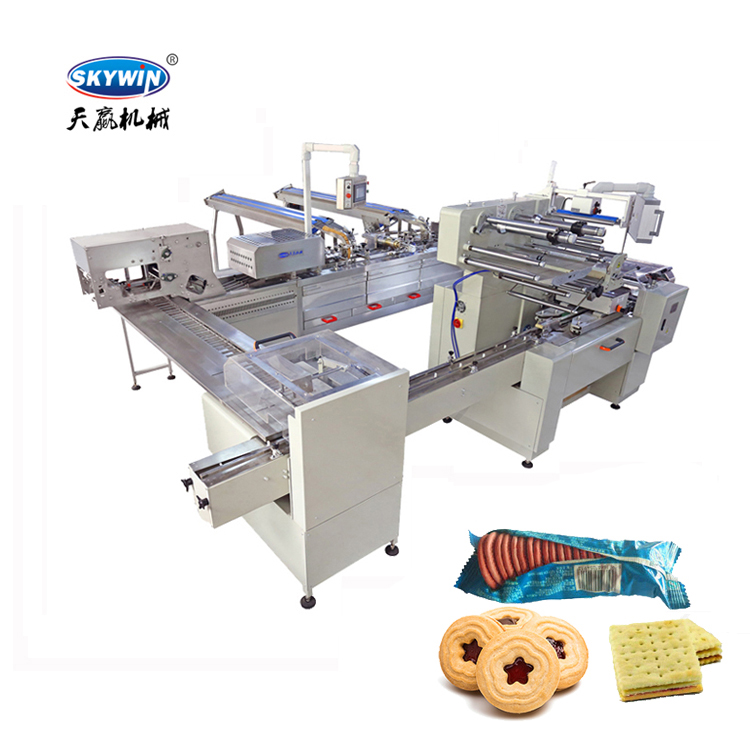
For sandwich biscuits, the product may first pass through a biscuit sandwiching and packing solution. Biscuits then need to enter the enrober in straight, evenly spaced rows.
A biscuit row multiplier can help arrange products for downstream chocolate coating or packing. Good alignment helps use the full working width of the enrober and reduces contact between biscuits.
After coating and cooling, products can move to an automatic biscuit feeding and packaging system.
Upstream and downstream machines must run at compatible speeds. Poor speed matching can cause biscuits to overlap, touch each other, or collect at transfer points.
Before selecting a chocolate enrobing line, ask the supplier:
Which food-contact parts can be removed?
How is the wire belt cleaned and adjusted?
Is the chocolate collection area easy to reach?
Which parts allow wet cleaning?
What cleaning tools are recommended?
Which spare parts should be kept in stock?
How does the machine connect with the sandwiching, cooling, and packing sections?
What product details are needed for line design?
Provide the supplier with biscuit dimensions, shape, weight, coating style, chocolate type, expected capacity, line width, and factory layout. Clear product information helps the supplier recommend a more suitable configuration.
A clean chocolate enrobing machine supports even coating, smooth belt movement, safe production, and easier product changeovers. Focus on biscuit crumbs, the wire mesh belt, chocolate collection areas, the chocolate curtain, bottoming parts, and the cooling section.
Skywin Foodstuff Machinery Co., Ltd. supplies customized equipment and connected solutions for biscuit production, sandwiching, cooling, and packing. To discuss your biscuit size, coating process, capacity, and factory layout, contact Skywin for a project-specific solution.
Remove crumbs and chocolate residue after each production run or product change. More detailed maintenance should follow operating hours, product conditions, and the manufacturer’s schedule.
Only use water on parts that are designed for wet cleaning. Keep water away from molten chocolate circuits, electrical parts, motors, and areas that cannot be fully dried.
Stop and isolate the machine. Remove crumbs with a soft brush, plastic tool, or approved vacuum. Never clean the belt while it is moving.
Possible causes include blocked chocolate flow, incorrect temperature or viscosity, poor biscuit spacing, belt speed, or an unsuitable blower setting.
Check the bottoming or tail-removal area for buildup. Also review chocolate viscosity, belt speed, and airflow settings.
Provide the biscuit size, shape, weight, chocolate type, coating method, target output, working width, upstream equipment, downstream packing plan, and factory layout.


