


Views: 0 Author: Site Editor Publish Time: 2026-10-19 Origin: Site


Cream-filled sandwich biscuits remain a popular product category because manufacturers can create different flavors, colors, and textures using familiar biscuit shapes. A classic chocolate biscuit with vanilla cream may sit alongside strawberry-filled varieties, chocolate sandwiches, or products with two cream layers. For a biscuit factory, the challenge is producing these variations consistently while keeping the sandwiching and packaging process efficient.
An automatic biscuit sandwiching machine handles the key steps after the biscuits have been baked: feeding the individual biscuits, depositing the filling, assembling the sandwich, and transferring the finished product to the next operation. The machine configuration determines which sandwich structures can be produced and how many product streams the line can handle.
At Skywin, our cream sandwich biscuit machine supports different lane arrangements, one to three cream colors, and 2+1, 3+2, or 4+3 sandwich structures. These options allow manufacturers to produce Oreo-style biscuits, cream-filled Marie biscuits, sandwich crackers, and other regular-shaped products using configurations suited to their recipes and production requirements.
Before choosing the number of production lanes, it is important to define the finished biscuit. A conventional cream sandwich and a three-piece biscuit with two cream layers require different assembly arrangements, even when they use similar biscuit shapes.
The terms 2+1, 3+2, and 4+3 describe the relationship between biscuit pieces and filling layers.
Sandwich structure | Biscuit pieces | Filling layers | Product possibilities |
|---|---|---|---|
2+1 | 2 | 1 | Classic cream sandwich biscuits |
3+2 | 3 | 2 | Double-layer cream sandwiches |
4+3 | 4 | 3 | Multi-layer sandwich biscuit products |
A 2+1 biscuit sandwiching machine places a layer of filling between two biscuits. This is the familiar arrangement used for many chocolate cream sandwiches and other everyday filled biscuits. It is a useful starting point for factories producing relatively simple products with one filling layer.
The 3+2 structure introduces another biscuit and filling layer, creating a thicker product with greater flexibility in its internal appearance. Manufacturers can also develop two-color cream combinations when using an appropriate configuration. The 4+3 format provides a further multi-layer option within our broader sandwiching machine range.
More layers do not automatically make a product better. A thicker sandwich affects finished dimensions, ingredient consumption, packaging, and the handling requirements of the downstream equipment. The chosen structure should reflect the product the factory intends to sell.
Sandwich biscuits can be differentiated through more than the outer biscuit. Filling color, flavor, amount, and deposited shape all influence the final appearance and eating experience.
Our automatic sandwiching equipment supports one, two, or three cream colors, with different cream tanks and depositing stencils used according to the selected arrangement. The machine can also handle fillings such as cream, jam, chocolate, and cheese with suitable settings and components.
For instance, a standard chocolate sandwich biscuit may use one cream color, while a 3+2 product can incorporate two differently colored filling layers. This allows manufacturers to develop visually distinctive products without changing the fundamental biscuit-feeding process.
The filling must still be suitable for the depositing equipment. Cream viscosity, temperature, and the selected stencil influence how evenly it is applied. A formulation that deposits smoothly through one stencil may need different settings when the shape or filling material changes.
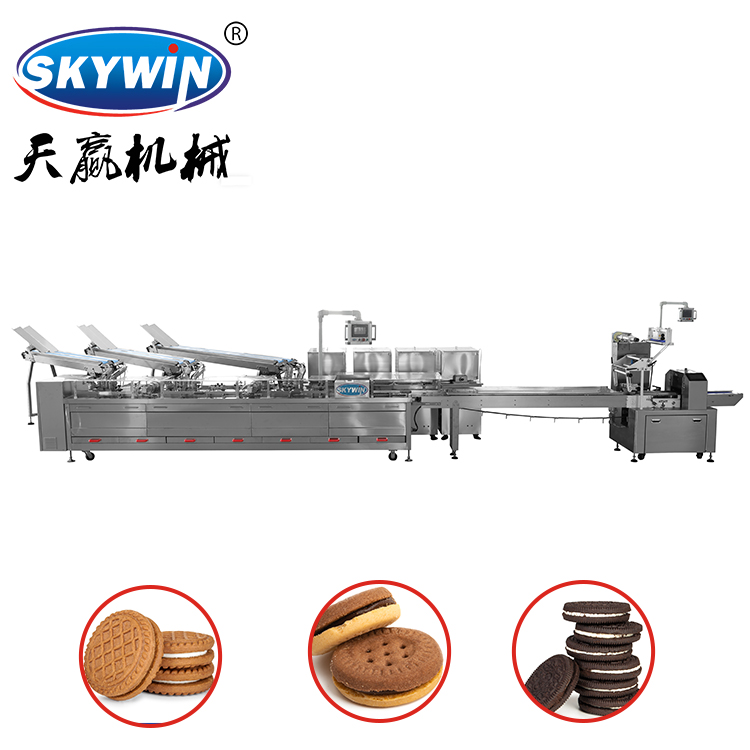
Our sandwiching equipment uses PLC touch-screen controls and servo-driven depositing arrangements. The product design includes independent cream hopper drives, stainless-steel gear pumps, and temperature-related features for the filling system.
These components support control of the cream-depositing process, while the interchangeable stencils allow different filling shapes, including round, square, and rectangular patterns.
The machine also incorporates a no biscuit, no cream function. Sensors detect whether a biscuit is present before filling is deposited, helping reduce unnecessary ingredient discharge when a biscuit is missing from the feed.
For manufacturers offering several products, repeatable settings and accessible cream-handling components can make changing between approved recipes more practical.
A higher number of production lanes can increase output, but the correct configuration depends on how many baked biscuits are available and how quickly the next stage can handle the completed sandwiches.
Skywin offers single-lane, two-lane, four-lane, and six-lane arrangements across its sandwiching equipment. The main product range includes published configurations from approximately 100 to 1,200 sandwiches per minute, depending on the selected model.
A smaller operation may find a single-lane machine sufficient for its production requirements. A factory processing larger quantities may benefit from a two-lane or multi-lane system, especially when upstream biscuit supply and downstream handling are organized for continuous operation.
Our biscuit sandwiching and packing solutions include different lane combinations for manufacturers with varying production requirements.
The most useful starting point is the quantity of baked biscuits available for sandwiching. For a 2+1 product, every finished sandwich requires two biscuit pieces. A 3+2 sandwich requires three, so the same supply of baked biscuits will produce fewer finished sandwiches when more biscuit layers are used.
The size and shape of the biscuits matter as well. Our single-lane machine range includes configurations for regular round and rectangular products, with specific biscuit dimensions defined for each model. Manufacturers should select the feeding and depositing arrangement according to the actual biscuit samples, not simply the widest or fastest available machine.
This is especially important when upgrading an existing bakery. Installing a higher-capacity sandwiching machine will not improve finished output if the preceding baking process cannot supply enough suitable biscuits.
Once the filling has been deposited and the sandwich assembled, the biscuits need to be transferred to packaging in an orderly manner. Manual handling between machines may be workable for smaller operations, but integrated feeding and packing can become more attractive as output increases.
Skywin's 2+1 two-lane biscuit sandwiching and flow packing machine combines double-lane filling and sandwiching with a directly connected flow packer. The system includes touch-screen control with recipe memory and accommodates different filling and packet arrangements.
For manufacturers producing a thicker product with two filling layers, we also offer a 3+2 two-color cream sandwiching and packing system. This configuration is designed to assemble three biscuits with two cream layers before transferring the finished sandwiches to a connected flow packing machine.
The 3+2 system uses a three-servo flow packer, with published packing speeds of 30–300 bags per minute depending on the packaging arrangement. The 2+1 integrated solution also provides different pack combinations and servo-controlled flow packing functions.
A common mistake is to compare sandwiches per minute directly with bags per minute. One package may contain a single sandwich or several biscuits, so the number of finished packages depends on the selected pack count and machine settings.
For example, a factory producing a high volume of individual sandwiches may need a different packing arrangement from one selling multiple sandwiches in each packet. Film dimensions, product height, feeding format, and sealing requirements also influence the final packing configuration.
Our biscuit packing machine range provides different equipment options for connecting biscuit handling with the required packaging format.
Planning the sandwiching and packing stages together helps manufacturers avoid producing biscuits faster than the downstream equipment can receive and pack them.
Factories developing several sandwich biscuit flavors need to think about how frequently they will change products. A manufacturer producing one standard chocolate cream sandwich for most of the day has different operating requirements from a bakery that regularly alternates between several cream colors and sandwich formats.
With the appropriate configuration, our equipment allows changes to cream tanks, stencils, and operating settings for different products. Removable cream hoppers, stainless-steel food-contact components, and accessible scrap-collection areas also support routine cleaning.
These features are particularly relevant when switching between fillings with different colors or flavors. The equipment should be cleaned appropriately between products, and the process must account for ingredient handling and applicable allergen-control requirements.
For buyers, this means evaluating changeover needs alongside production speed. A machine selected only for its maximum output may not be the most practical option if the factory regularly produces smaller batches of several different products.
A well-matched biscuit sandwiching system begins with a clear finished-product specification. Before preparing a machine proposal, we need to understand the biscuit shape and dimensions, desired sandwich structure, number of cream colors, filling material, target output, and packaging format.
These requirements determine whether a single-lane machine, a two-lane system, or a more extensive multi-lane arrangement is suitable. They also help us evaluate the cream-depositing components and how the sandwiching machine should connect to downstream equipment.
At Skywin, we support equipment selection through biscuit sample discussions, recipe-related assistance, and production layout planning. Our technical services and spare parts support also provide a resource for customers considering installation and ongoing operation.
For a factory upgrading its existing biscuit line, it is useful to identify which equipment is already available before ordering a new sandwiching module. A dedicated sandwiching and packing system can be integrated into a broader biscuit manufacturing process without unnecessarily replacing the existing dough preparation, forming, and baking equipment.
An Oreo-style sandwich biscuit line should be designed around the finished biscuit rather than the maximum advertised speed of the machinery. The number of biscuit and filling layers, cream colors, lane configuration, and packing format all influence which equipment arrangement will work best.
Our biscuit sandwiching machines support 2+1, 3+2, and selected 4+3 structures, along with different cream and filling combinations. Integrated flow packing options allow manufacturers to connect the sandwiching process with the required packaging stage.
For a new sandwich biscuit product or an upgrade to an existing factory, contact our Skywin team with your biscuit samples, preferred fillings, production requirements, and packing format so we can discuss a suitable equipment configuration.
A 2+1 sandwich contains two biscuits and one filling layer. A 3+2 sandwich uses three biscuit pieces separated by two filling layers, creating a thicker multi-layer product.
Our sandwiching machine range supports one, two, or three cream colors through suitable cream tank and stencil arrangements. The available combinations depend on the selected machine configuration.
Yes. Our equipment range lists cream, jam, chocolate, and cheese among the supported fillings, with appropriate depositing components and settings.
No. The sandwiching machine receives biscuits that have already been baked and performs filling and assembly. Baking equipment belongs to the upstream production process, while flow packing can be connected after sandwiching.


